
Less than a minute Read
Britain’s Pools Are at a Tipping Point

Category
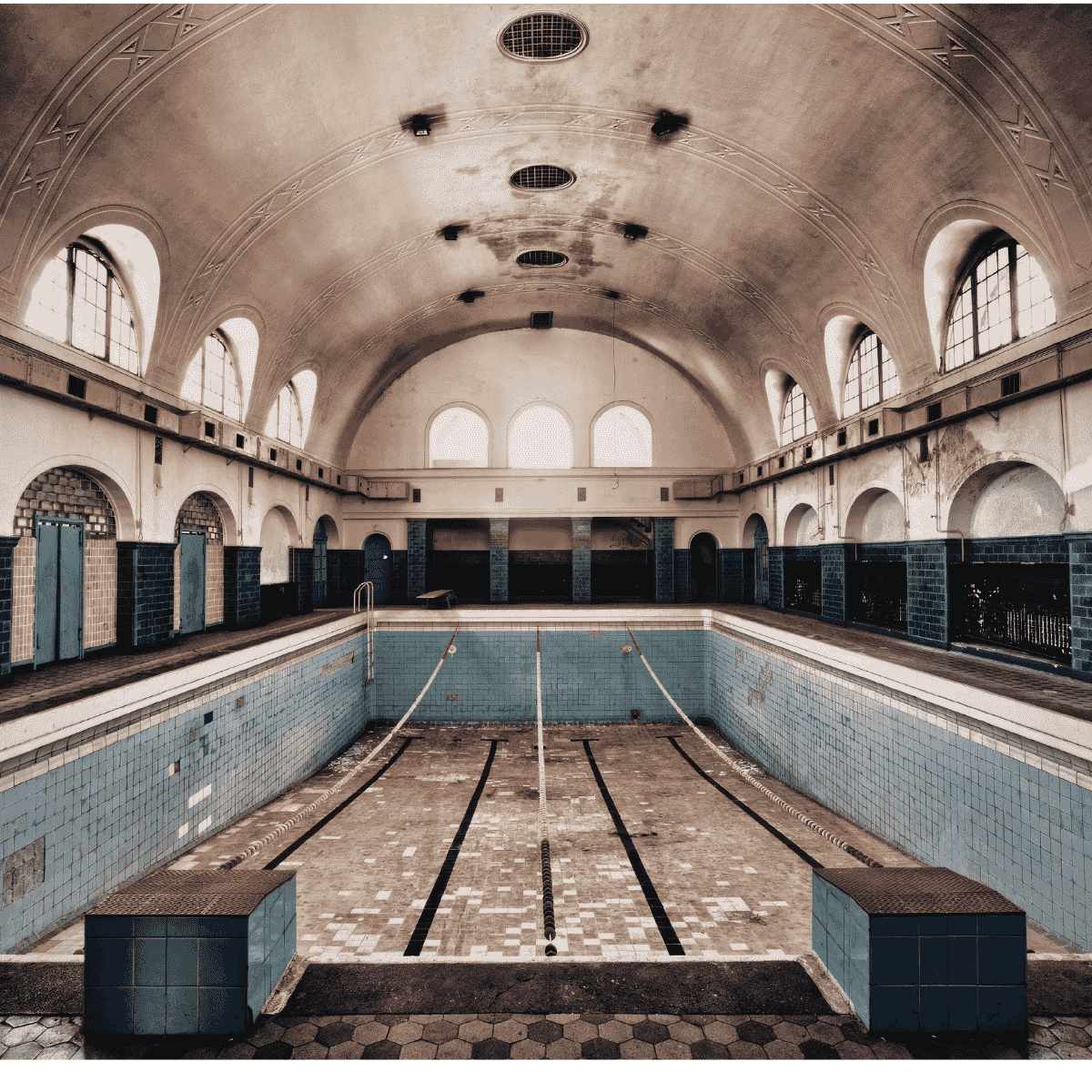
Last month, the All Party Parliamentary Group on Swimming published a report called ‘The Deep End’. If you work in or around the aquatics sector, I’d encourage you to read it. If you’re a local authority decision-maker, I’d say it’s essential reading as the picture it paints is one that those of us who spend our working lives designing, building and specifying equipment for indoor pools have been watching unfold for years.
The report is a formal call to government for long-term, strategic intervention. More than 200 submissions from operators, governing bodies and clubs were gathered as evidence. The conclusion is stark: Britain’s swimming pool network is ageing fast and becoming unsustainable without urgent action.
The Numbers Are Hard to Ignore
More than 1,200 pools are now over 40 years old and past their expected operational lifespan. Since 2010, hundreds have already closed for good.
Leisure DB’s State of the UK Swimming Industry Report 2024 puts the current total at 4,272 pools, down from 4,559 before the pandemic. Public leisure centres have seen the sharpest decline, with 25 closures and only nine new openings in the most recent reporting period.
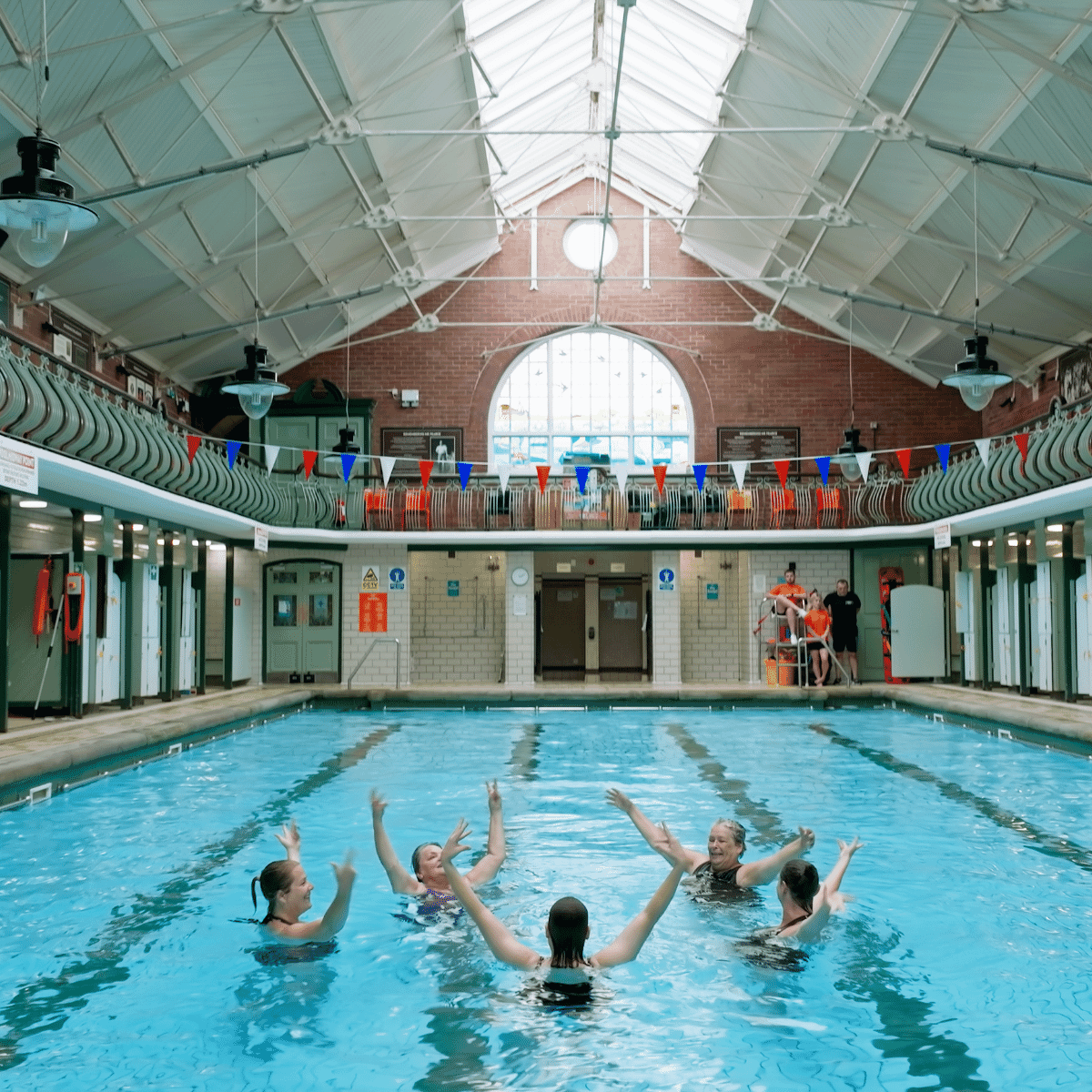
Meanwhile, demand for swimming hasn’t fallen; if anything, the evidence points the other way.
Energy Costs Are at the Heart of It
When I wrote about this issue earlier this year, I pointed out that the primary driver of pool closures isn’t a lack of public appetite for swimming, it’s the financial pressure on local authorities with energy costs being a central part of that equation. The APPG report confirms the same thing. Energy prices remain nearly double pre-pandemic levels and for operators already running on tight margins, that’s often the deciding factor between keeping a pool open or closing the doors.
A typical 25-metre public pool spends the majority of its non-staff budget on energy. Ventilation, dehumidification, water heating and filtration can’t simply be switched off, making indoor pools particularly energy-intensive environments.
This is precisely the problem Recotherm was built to solve. For over 40 years we’ve designed and manufactured ventilation and dehumidification systems exclusively for indoor pool environments, from small school pools to large municipal leisure centres. That single-sector focus matters; pool halls are among the most technically demanding environments in the built estate due to high humidity, aggressive chlorinated air, variable occupancy and year-round operation. A system designed specifically for that environment by engineers who have spent decades in it will perform very differently from a general HVAC solution adapted for the purpose.
A Public Health Issue
The APPG report explicitly calls for government to formalise the role of pools in public health by expanding social prescribing and co-locating NHS services within leisure facilities. I’ve made a similar argument before: investing in leisure centres is arguably one of the smarter ways to support the NHS over the long term.
Swimming is a low-impact, full-body activity accessible to people of almost any age or physical condition. For those managing chronic illness, recovering from injury or at risk of conditions like cardiovascular disease or type 2 diabetes, a council pool is often the most realistic route into regular physical activity. When those pools close, particularly in areas of higher deprivation, that route closes with them.
The APPG report also highlights water safety as a critical concern, calling for a guarantee that all children leave primary school with essential life-saving skills. That’s only achievable if the pools are there to teach in.
Investment Alone Won’t Be Enough
The APPG’s call to government includes directing the £400 million investment announced for grassroots sport toward pools and leisure centres. That would be welcome, however as the report itself notes, newer facilities with better environmental and economic performance demonstrate what’s possible when investment is well-planned and well-specified.
This is where I’d add a note of caution from our side of the industry. Capital funding is only part of the equation. Councils and leisure trusts that invest in refurbishment or new builds need to make equally careful decisions about the systems that go into those buildings because running costs will determine whether a pool survives the next few decades.
Ventilation and dehumidification are the single largest energy loads in an indoor pool environment. However they also do something that doesn’t always make it into the procurement conversation – protect the building.
Uncontrolled humidity and inadequate ventilation cause progressive, often irreversible damage to structural elements, roof timbers, wall substrates and poolside finishes. We’ve seen facilities where the mechanical system has been under-specified or poorly maintained and the building fabric tells the story.
Condensation, corrosion, spalling concrete and degraded steelwork aren’t cosmetic problems. They are the deteriorating, expensive consequence of getting the environmental control wrong from the start.
Choosing systems based on upfront cost rather than lifetime performance is a false economy that the sector has paid for dearly. Whole-life cost modelling, accounting for energy use, maintenance requirements, system longevity and the cost of building remediation if environmental control fails consistently favours investing properly at the outset. It’s this reasoning that forms the fundamental design of our specialist air handling units that have a minimum 25-year operational life due to double-skinned insulated casework panels and coated aluminium recuperators built to withstand the specific corrosive demands of a pool atmosphere.
Retrofit Is Part of the Answer
Not every pool needs to be rebuilt from scratch. For many facilities, particularly those that are structurally sound but running on ageing mechanical systems, retrofitting is a highly cost-effective route to significantly lower energy bills, improve air quality and extend building life.
We carry out site assessments and retrofit projects across the UK and the results are consistent. Upgrading to fully modulating fans and bespoke control strategies pre-set for typical pool usage, gala days and seasonal variation, routinely delivers energy reductions of up to a third compared to standard air handling units running at fixed output. For a facility spending £150,000 or more a year on energy, that’s a material difference.
Beyond energy, the right retrofit also stabilises the pool environment in ways that protect the building long-term. Consistent humidity management reduces the corrosive load on structural elements, extends the life of poolside finishes and metalwork and prevents the kind of cumulative fabric damage that turns a manageable maintenance budget into a capital problem. For an ageing estate (the APPG report is clear that most of Britain’s pools qualify), this is a serious consideration and the recommendation to prioritise sustainable, energy-efficient design isn’t just relevant to new builds. It’s equally relevant to the 1,200+ pools that are already past their design life and serving communities right now.
What Needs to Happen
The APPG’s recommendations cover a lot of ground, from sustained government investment and a national pool strategy to school swimming guarantees and the formal integration of pools into public health policy. These are the right asks but for those of us working directly with operators, facility managers and engineers, the more immediate question is: when investment does arrive, how do we make sure it achieves lasting change?
A few principles seem worth stating clearly:
- Energy performance should be a primary procurement criterion, with whole-life cost modelling as standard
- Structural protection must be part of the brief
Ventilation and dehumidification systems are the primary defence against building fabric deterioration in an indoor pool environment - Retrofit should be considered seriously alongside replacement
The embodied carbon and cost of building new is significant; if practical, improving what exists is often the better answer - Controls matter as much as hardware
A well-specified ventilation system run on a poorly configured control strategy will never perform as intended; these two elements need to be commissioned and maintained together - Access and affordability must remain central to the brief
Energy savings that are reinvested in keeping admission prices accessible serve the public health case far better than savings that disappear into general budgets
Final thought
The APPG report is titled ‘The Deep End’ for good reason. Britain’s pools are in genuinely difficult waters, but the report does make it clear that the situation is recoverable as long as the government acts with intent and the sector uses whatever investment arrives to build facilities that are genuinely sustainable over the long term.
During our 40+ years designing and manufacturing swimming pool ventilation and dehumidification systems, we’ve seen what keeps pools open and what closes them. The decisions made at the point of investment about energy efficiency, structural protection, system longevity and controls matter enormously, both for the communities that rely on these facilities and for the operators responsible for keeping them viable.
If you’re involved in a pool refurbishment, new build or are simply trying to understand what your current system is actually costing you, we can help. Our independent site assessments, whole-life cost analysis and retrofit consultations will give you a clear picture of what it would actually mean for your energy bills, your building and your budget.