
Less than a minute Read
Swimming Pool AHU Controls: BEMS Explained | Recotherm

Category
Swimming Pool AHU Control Systems: Understanding the Role of the BEMS
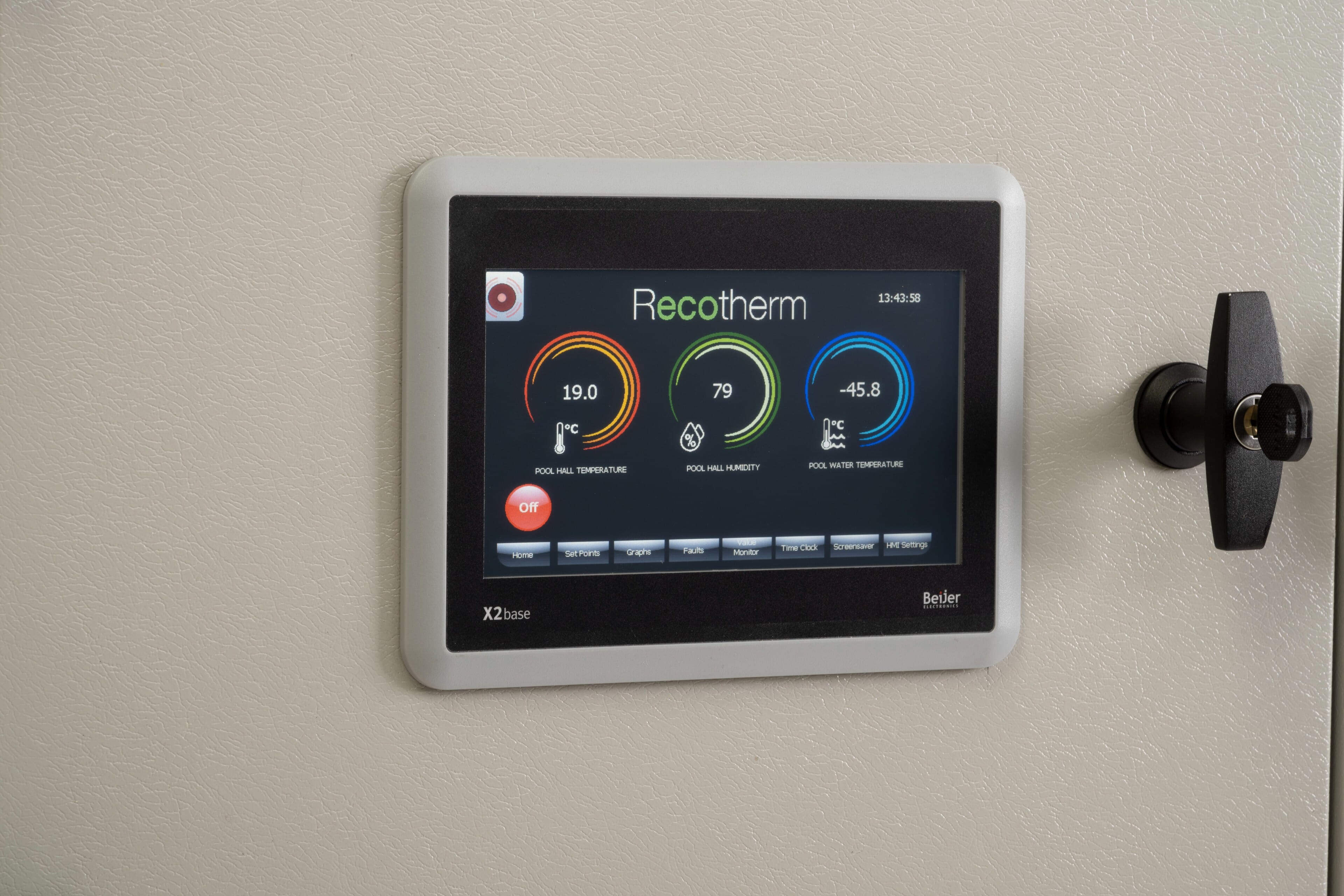
BEMS is the control platform that governs how a swimming pool air handling unit responds to changes in temperature, humidity and occupancy. In a pool environment, the BEMS continuously manages fans, dampers, heating valves and heat recovery functions to maintain stable conditions, protect the building fabric and minimise energy consumption.
Typical pool hall conditions are maintained within carefully controlled humidity ranges to prevent condensation and corrosion while ensuring occupant comfort.
However we’ve recently seen a growing trend among larger companies to replace the original BEMS on their swimming pool air handling units (AHUs) and integrate them into a central building energy management system. While this might seem convenient and efficient, it can actually lead to significant and costly problems.
BEMS Expertise
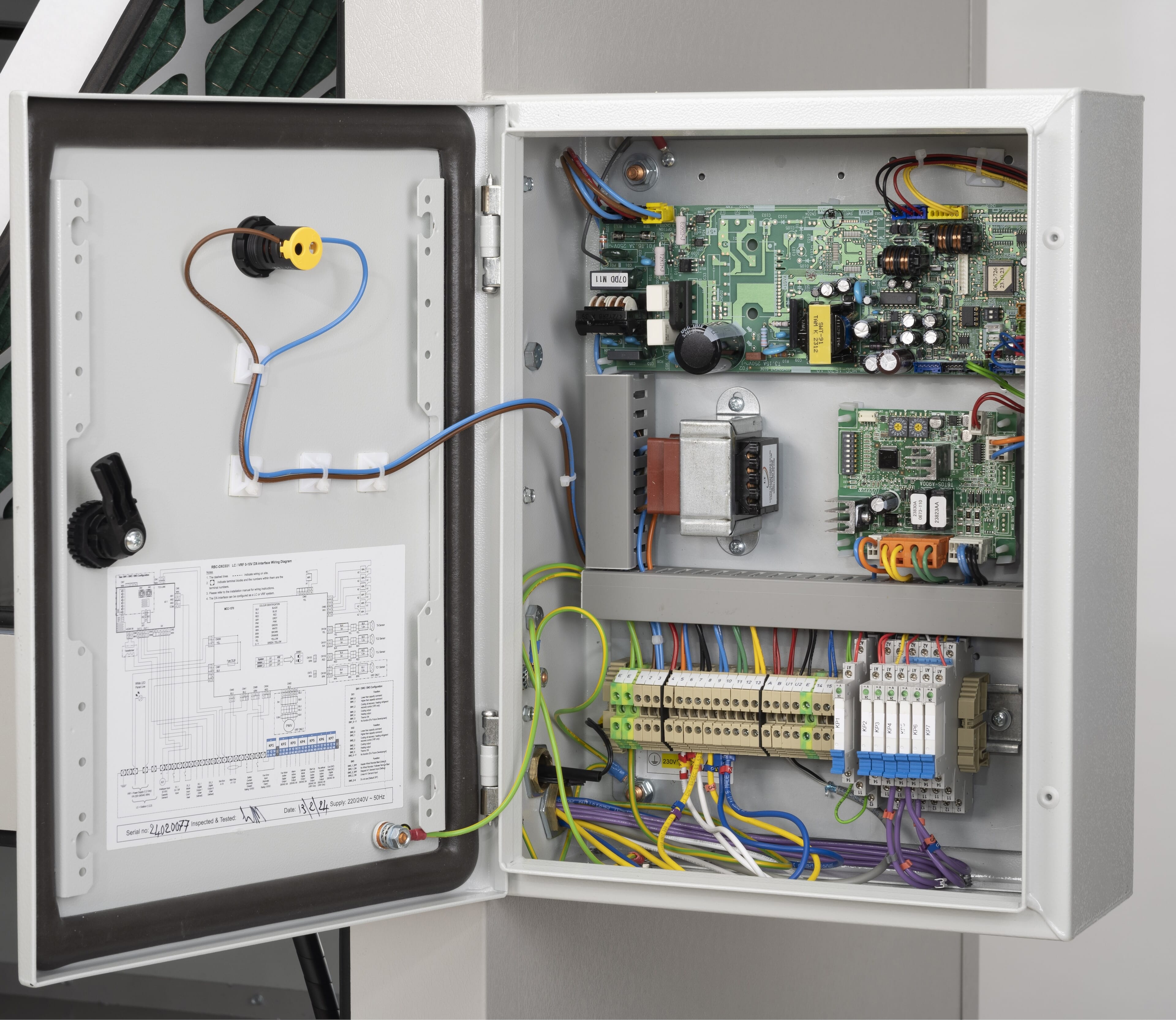
At Recotherm, our BEMS is not just a standard component. Our controllers are the heart of our swimming pool ventilation systems, containing over 40 years of specialist knowledge and experience. Each control programme has been developed by environmental engineers who deeply understand the psychrometric principles of ventilating wet areas.
Why Recotherm Writes Its Control Strategies In-house
Swimming pool environments are uniquely challenging and require precise management of temperature, humidity and airflow to protect both the building and its users.
Unfortunately, we’ve found that we are often not notified when our original swimming pool BEMS controllers have been removed and replaced. In some cases, we only discover this at a routine service visit when we suddenly find we can no longer calibrate critical sensors or access key functions. In other cases, we receive an urgent call-out because the pool hall atmosphere is uncomfortable or not performing as expected.
This puts us in the difficult position of having to explain that the unit is no longer capable of doing what it was designed to do. It’s a bit like buying a high-performance sports car and then swapping the engine for one from a small family hatchback; it might technically run but it will never deliver the performance, efficiency or reliability you paid for.

The Risks of Modifying or Replacing a Pool AHU BEMS
When a swimming pool AHU BEMS is replaced and the AHU is integrated into a central BEMS, the complex needs of the pool environment are often not fully understood by generalist BEMS operatives.
This can result in:
- Reduced indoor air quality, leading to an uncomfortable and potentially unhealthy pool hall atmosphere.
- Increased wear and tear on components, leading to more frequent breakdowns, higher maintenance costs and a reduced lifespan of the AHU.
- Damage to the building fabric, such as corrosion and damp issues.
- Higher energy consumption, which means increased operational costs.
Why Recotherm’s BEMS Is Different
At Recotherm, every pool AHU control strategy is developed specifically for the individual pool hall. Operating parameters are tailored around factors such as pool hall type, occupancy patterns, desired humidity levels and airflow requirements. Fully modulating fans and controls allow each unit to respond dynamically rather than relying on fixed set points, ensuring optimum efficiency throughout the year.
Unlike many manufacturers, Recotherm continues to refine and update control strategies after installation. As operating requirements change, our engineers can adjust software parameters and optimise system performance throughout the life of the unit, a level of ongoing support that supports ongoing energy-efficiency and unit longevity.
The BEMS philosophy is embedded across the entire Recotherm range, where intelligent control is a key part of delivering long-term energy efficiency and environmental stability.

BEMS Adaptation
Although we strongly advise against changing an original BEMS, if you wish to link your Recotherm AHU to your central BEMS system, we advise that you get in touch before your BEMS company removes our controller.
We are more than happy to talk them through how to seamlessly integrate their system with ours.
What This Means for Specifiers and Facilities Managers
When you choose Recotherm, you are investing in decades of carefully developed expertise specifically designed to protect your building, reduce your energy bills and provide a safe and pleasant swimming environment. Our units have been BEMS compatible for decades and we can ensure you get the convenience of central monitoring without sacrificing the specialist control your pool environment requires.
Ultimately, the initial perceived convenience of central control can turn into a much larger and more expensive problem down the line.
The pool AHU control system you have paid for is there to do one thing exceptionally well: manage your pool hall environment properly and efficiently.
Trust it to do what it was designed to do.
Specifying a new pool AHU or maintaining an existing system?
Recotherm’s engineering team can advise on control strategies, BEMS compatibility and system optimisation. Get in touch for a technical consultation.
Popular questions
In a pool application, the BEMS continuously adjusts the AHU’s operation in response to changing conditions, helping to optimise energy efficiency and reduce running costs. A well-designed custom control strategy ensures the pool hall remains within the required humidity and temperature ranges, while avoiding unnecessary energy consumption.
At Recotherm, every BEMS strategy is tailored to the specific pool and can be refined over time as operating requirements change, ensuring long-term performance and efficiency.
Because Recotherm retains ownership and understanding of the control philosophy, our engineers can provide ongoing support and make software adjustments as operational needs evolve. This ensures that the AHU continues to perform as intended throughout its life, rather than relying on generic settings or third-party interpretations of the original design.
Having direct access to the people who designed and programmed the system helps maintain reliability, protect building assets and maximise long-term energy performance.
Recotherm systems are programmed specifically for each pool, with control sequences developed around occupancy patterns, humidity targets, heat recovery performance and fan modulation. Replacing the original BEMS with a generic solution may compromise environmental control, increase energy consumption and reduce the level of protection provided to the building fabric.
For this reason, any BEMS replacement should be carefully evaluated. In many cases, updating or refurbishing the existing controls with support from Recotherm’s engineers can preserve the unit’s intended performance while avoiding unnecessary disruption and risk.
Because every Recotherm system is programmed specifically for the individual pool, control strategies can also be updated as requirements evolve. Whether a facility makes structural changes, updates its opening hours, introduces new activities or experiences changing usage patterns over time, Recotherm’s engineers can refine the software settings to ensure the AHU continues to deliver efficient performance and effective humidity control.
This ability to optimise and adapt control strategies after installation helps maintain energy efficiency, protect the building fabric and maximise the long-term value of the system.
In severe cases, the AHU may shut down completely or operate in a limited fail-safe mode, potentially causing discomfort for users and higher energy consumption. Prolonged loss of humidity control can result in costly damage to the pool hall structure and surrounding areas.
Because the BEMS is critical to both environmental control and asset protection, any replacement or upgrade should be carefully planned. Maintaining the original control philosophy and ensuring that operating strategies are correctly configured for the specific pool are essential to preserving performance and reliability.
Thermal comfort is also worth addressing carefully. Spectator galleries tend to have variable occupancy, so a fixed-rate ventilation system will often either overcool the space when it’s empty or struggle to maintain air quality when it fills. Demand-controlled ventilation responds to actual conditions and performs better in practice.
Engaging with the HVAC designers early, particularly for competitive facilities where event or governing body standards may apply, avoids design changes further down the line.