
Less than a minute Read
Sustainability in Indoor Pool Dehumidification

Category
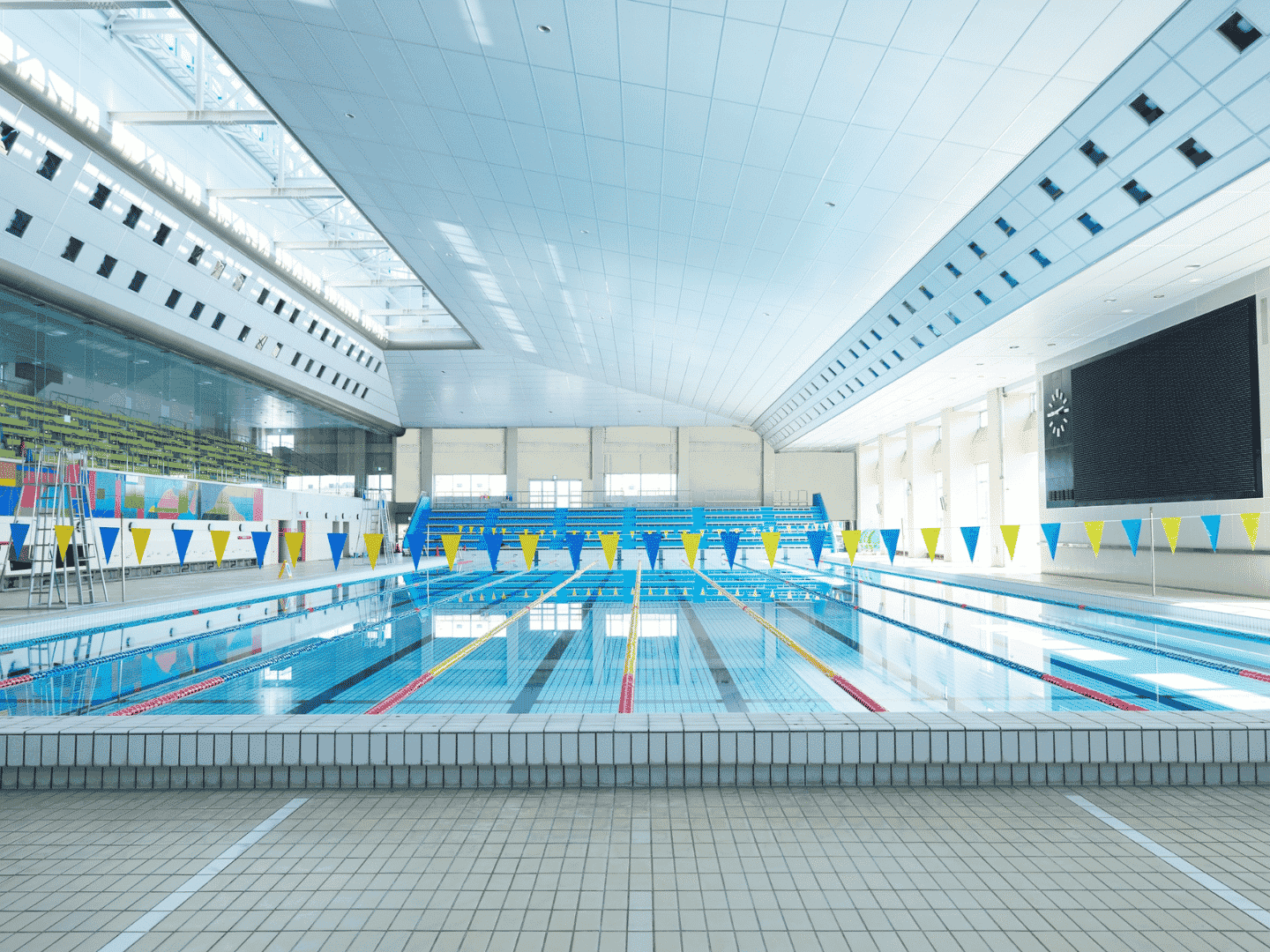
The indoor swimming pool sector has a real sustainability story to tell, but only if specifiers and operators know where to look.
In the built environment, sustainability appears in virtually every specification brief, tender document and design team presentation. Yet in the context of indoor swimming pools, one of the most energy-intensive building types in operation, what sustainability actually demands of the mechanical and electrical engineer, the specifier and the facilities manager is often poorly understood.
This article sets out what meaningful sustainability looks like in indoor pool dehumidification and ventilation: the operational, structural and strategic, because the decisions made at specification stage have consequences that extend for decades.
The Energy Baseline
An indoor swimming pool operates continuously. The evaporation load from the water surface is continuous, as is the demand on the swimming pool air handling unit. Industry figures consistently show that the air handling unit accounts for the majority of energy consumed in an aquatic facility, which in many cases is upwards of 60% of total site energy use.
That baseline is the starting point for any credible sustainability conversation. Reducing it requires the right technology, sized correctly, operating at maximum efficiency across the full range of pool conditions.
Heat recovery sits at the heart of this. An indoor pool dehumidification unit that incorporates a high-efficiency recuperator (recovering heat from warm, moist exhaust air and transferring it to incoming fresh air) can dramatically reduce the energy required to heat the pool hall.
The effectiveness of that heat exchange depends on the recuperator’s thermal conductivity and construction. Coated aluminium, for example, offers significantly better performance than composite alternatives while also resisting the corrosive chloramine-laden environment of a pool hall.
The Refrigerant Transition
The phase-down of high-GWP (Global Warming Potential) refrigerants under the UK F-Gas Regulations is well underway. For pool operators and specifiers, this has direct implications and systems specified today should use low-GWP refrigerants as standard. Specifying equipment with legacy HFC refrigerants creates a compliance risk over the system’s operational life and potentially a stranded asset before the equipment reaches end of service.
This is one area where short-term cost comparison can be genuinely misleading. The whole-life cost of a swimming pool air handling unit using compliant refrigerants, factoring in the likely future cost and availability of HFCs, and the legislative trajectory makes the case clearly. Sustainability here is inseparable from financial prudence.

Variable Temperature Variable Humidity
One of the most significant operational efficiency gains available in pool ventilation comes not from the equipment itself, but from how it is controlled. A pool hall does not run at full occupancy 24 hours a day. During low-occupancy periods, early mornings, late evenings, off-season sessions etc., the ventilation load is substantially lower than peak design conditions.
We utilise our Variable Temperature Variable Humidity (VTVH) strategy which allows the system to respond to actual pool hall conditions rather than running at full capacity regardless. By modulating airflow and dehumidification output in response to real-time fresh air humidity and temperature, the system delivers what is needed, when it is needed and nothing more.
Fully variable speed fans are central to this. They enable proportional response and avoid the energy penalty of running at constant full load. For a system operating across a 20+ year life, the cumulative energy saving is substantial.
A building energy management system (BEMS) extends this further, enabling centralised monitoring, fault detection and performance benchmarking, all of which support ongoing efficiency management and demonstrate performance to operators.
Whole-Life Cost
The sustainability case for indoor pool ventilation can be undermined at the point of specification. Capital cost comparison, without reference to operational cost or asset life, favours cheaper equipment that will cost significantly more to run.
A high-efficiency pool dehumidification unit with effective heat recovery, low-GWP refrigerants and demand-controlled operation carries a higher initial price point. Evaluated over a 25 year operational life, the realistic expectation for a quality system in a properly maintained pool environment, that premium is typically returned many times over in reduced energy expenditure.
The whole-life cost model should form part of any sustainability assessment submitted alongside a specification. It is also the most effective tool available for communicating the value of quality engineering to clients who are focused on first cost.
The Structural Dimension of Sustainability
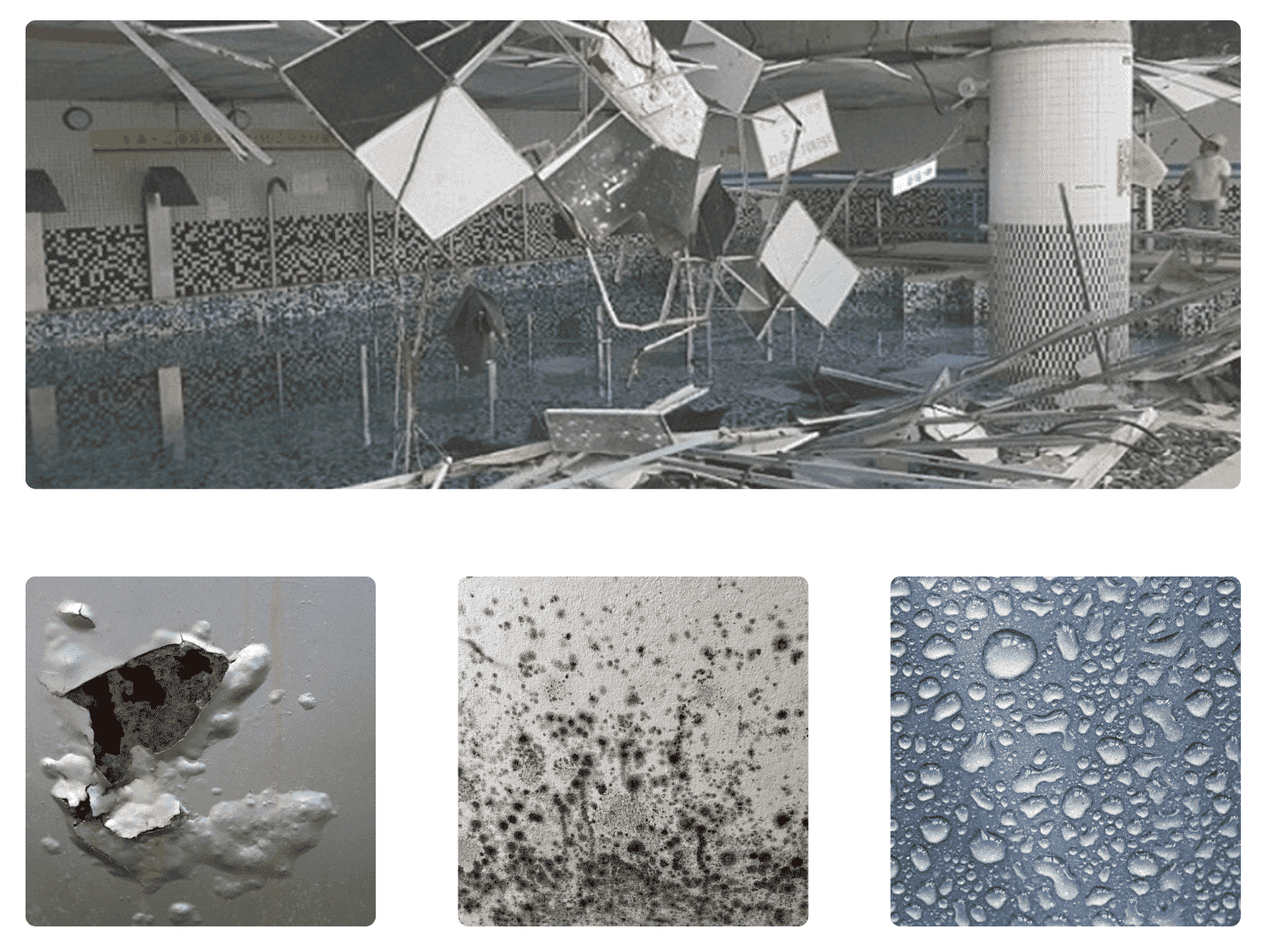
Sustainability in pools is not only about energy. The consequences of a poorly performing ventilation and dehumidification system extend to the building fabric itself.
A pool hall operates in a permanently hostile environment that will, over time, cause condensation, corrosion and structural degradation if the air is not managed correctly. Roof structures, wall ties, steelwork and concrete are vulnerable to issues resulting from inadequate dehumidification.
The cost of structural remediation in a chloramine-laden environment is significant. In some cases, it represents an existential threat to a facility’s operational future. Preventing it is, in every sense, a sustainability issue: the embodied carbon in a pool building is enormous and prolonging its operational life is one of the most effective sustainability contributions.
An indoor pool dehumidification system that is correctly specified, properly commissioned and appropriately maintained protects that investment.
The Bigger Picture
As detailed in our recent article, the UK’s public swimming pool stock is under pressure, with the APPG report highlighting the volume of pools lost to closure in recent years. Many of them are victims of rising energy costs, ageing infrastructure and the capital burden of overdue maintenance.
The sustainability argument for investing in quality mechanical engineering in pools is directly connected to the survival of community aquatic facilities. A swimming pool that operates efficiently is more viable and a pool with well-maintained building fabric has a longer useful life. The M&E engineer and specifier who prioritise whole-life performance over first cost are, in the most practical sense, contributing to the preservation of public swimming infrastructure.
A genuinely sustainable pool ventilation and dehumidification specification will:
• Incorporate high-efficiency heat recovery to minimise heating energy demand
• Specify low-GWP refrigerants compliant with current and foreseeable F-Gas legislation
• Include demand-controlled ventilation with variable speed fans for responsive, proportional operation
• Feature custom control strategies for ongoing performance monitoring and energy management
• Be evaluated on whole-life cost, not capital cost alone
• Be designed to protect the building fabric over the full operational life
• Be supplied and supported by a manufacturer with specialist pool sector knowledge
Sustainability in indoor pool ventilation is a set of decisions, made at multiple stages, that determine how efficiently and how long a pool facility operates. The engineer and specifier who understand that and who can communicate it clearly to clients are the ones best placed to deliver buildings that are genuinely sustainable.
The education of the wider industry is a key part of our CIBSE-accredited CPD ‘Designing Swimming Pool Ventilation Systems’.
Our team of experts would be delighted to host a lunch-and-learn session at your offices, deliver a hybrid presentation or run the CPD entirely online.
Click the button below to register your interest, expand your knowledge and earn CPD points.